
Seasons Through The Lens
Nature & Landscape Photography Ideas
Every season shows a unique natural beauty. Whenever the season changes, it brings with it many beautiful moments, like:
The spring season brings fresh colors and blossoms, the summer shines with long golden evenings, the beautiful sunsets, the autumn shows the world in warm shades of orange, red, and golden brown, and winter brings you the foggy sunrise and shining dew drops.
At Golden Landscapes, we believe photography is not just about clicking pictures – it’s about capturing those feelings, the seasons, and the beauty of nature in its raw natural form.
Golden landscapes
Best Nature & Landscape Photography
Golden Landscapes offers the best nature & landscape photography, showing the calm and beautiful side of nature.
From sunsets, landscapes, night sky, clouds, flowers, to green fields, our high-quality images are perfect for sharing, digital use, decor, or inspiration.
What is Nature and Landscape Photography?
Nature and landscape photography is a style of photography that focuses on capturing the beauty of the natural world. It includes outdoor scenes like:
- Nature details: Flowers, plants, trees, rocks, and wildlife in their natural environment.
- Landscapes: Mountains, rivers, forests, deserts, beaches, sunsets, and skies.
Seasons Through the Golden Lens
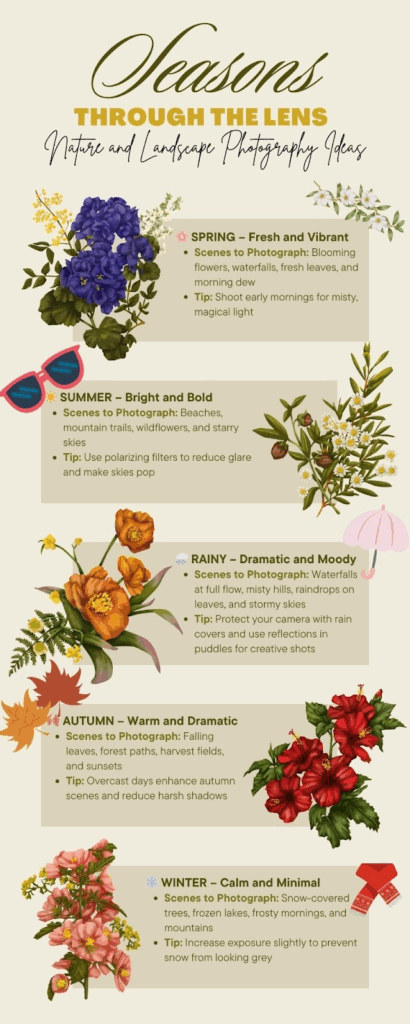
Spring Season
- Flowers bloom and fill the world with colors.
- Soft golden sunlight makes everything look gentle and bright.
- Perfect time to capture new life, fresh greenery, and morning dew.
Summer Season
- Long days mean more chances for golden sunsets.
- Beaches, mountains, and open fields shine in warm light.
- Photos feel full of energy, fun, and bright.
Rainy Season
- Raindrops bring freshness and life to everything.
- Golden rays after rain make the world sparkle.
- The Colourful Rainbow shining after the rain.
Autumn Season
- Leaves turn orange, red, and golden brown.
- Forests and landscapes glow like living fire in the evening sun.
- The best season to capture change, warmth, and nostalgia.
Winter Season
- Snow and frost sparkle in the soft golden light.
- Dew drops shine in mornings and evenings
- Shows the peaceful and quiet side of nature.
Together – A Golden Journey
- Every season has its own golden story.
- Spring shows freshness, summer brings energy, rain adds magic, autumn feels nostalgic, and winter shows peace.
What to capture: not just the view, but the feeling of each season – the joy, calm, or warmth it creates.
Tips & Tricks for Nature and Landscape Photography
- Chase the golden hour
The best light comes just after sunrise and just before sunset. The sun is soft and warm, making everything look magical. - Use what’s around you
Trees, rocks, flowers, or even a winding road can make your picture more interesting. Think of them as natural frames for your photo. - Keep it steady
If your hands shake, your photo may blur. Using a tripod or resting your camera on a stable surface, such as a rock, can help you take sharp shots. - Wait for the moment
Don’t rush. Sometimes the perfect light or cloud formation takes a few extra minutes. Patience often rewards you with the best picture. - Look for reflections
Water – whether in the form of lakes, rivers, or puddles – can transform your photo into a mirror of beauty, doubling the magic of the scene. - Add depth
Place something close in the frame (like a flower or stone) and let the background stretch far behind it. This makes your picture look more alive. - Play with angles
Don’t just shoot from eye level. Kneel, climb a little higher, or tilt your camera — a small change in angle can make a big difference. - Keep it simple
Too much in one photo can feel messy. Focus on one main subject – such as a mountain, a tree, or a sunset – and let it shine. - Use natural lines
Paths, rivers, fences, or even shadows can guide the viewer’s eye through your photo. It makes the picture more engaging. - Tell a story
A good photo isn’t just about beauty – it makes people feel something. Ask yourself: “What story does this scene tell?” and try to capture that.
Common Mistakes in Nature & Landscape Photography
- Shooting in harsh midday light
The sun is too strong at noon, which makes photos look flat and washed out. Instead, try mornings or evenings when the light is softer and warmer. - Forgetting the foreground
Many people only focus on the mountain, sunset, or sky. However, adding something in the foreground – such as a tree, rock, or flowers – gives your photo depth and makes it more interesting. - Trying to capture “everything” in one frame
It’s tempting to fit the whole view, but too much can make the photo messy. Pick one main subject (a tree, a river, or a sunset) and let it shine. - Not waiting for the right moment
Sometimes people click too quickly and move on. But light, clouds, or even a bird flying across can change the whole picture. A little patience often gives magical results. - Ignoring the weather
Cloudy skies, light rain, or even fog can create a moody and dramatic atmosphere. Don’t just wait for sunny days – use the weather to your advantage. - Shaky hands = blurry photos
If you don’t hold the camera steady, even the best scene won’t look sharp. Use both hands, lean on something, or use a tripod when you can. - Not cleaning the lens
It’s a small thing, but dust, fingerprints, or raindrops on the lens can spoil a perfect shot. Always give your lens a quick wipe before shooting. - Ignoring the story
A photo is more than just a picture. It should make people feel something – calm, joy, nostalgia, or wonder. Ask yourself: “What story am I telling here?”
✨A Bonus Tip: Don’t compare your photos too much with others. Everyone sees nature differently. Your unique way of seeing is what makes your photos special.
Frequently Asked Questions (FAQs)
Q1. Do I need a professional camera for landscape photography?
Not at all! Even a smartphone can capture beautiful landscape photography if you use good light and the right angle. A camera helps, but your eye, skills, and patience matter more.
Q2. What is the best time of day to take landscape photos?
The golden hours, just after sunrise or just before sunset. The light is soft, warm, and makes everything glow, making it the best time to take landscape photography.
Q3. Can I take good photos in bad weather?
Yes! Fog, rain, strong wind, and clouds can add mood and drama. Sometimes “bad weather” creates the most unique photos.
Q4. What is the difference between nature and landscape photography?
Nature photography can be anything in nature, like plants, animals, flowers, or insects. Landscape photography focuses on wide sceneries like mountains, fields, and oceans.